NOBO
NOBO
UX Research Case Study
UX Research Case Study

Role: UX Research
Project type: Research-Driven App Concept
As alcohol culture continues to dominate social spaces, many people who choose not to drink struggle to find meaningful ways to connect with others. While drinking is often positioned as the default social activity, a growing number of individuals are actively reducing or eliminating alcohol from their lives.
This project explores how a digital platform might help non-drinkers build community, discover local activities, and feel less isolated in social environments.
Understanding the Problem
I began by examining the broader social landscape. Many people find it easy to meet others in environments centered around alcohol, such as bars or parties. However, those who choose not to drink often struggle to find comparable social opportunities.
The core tension became clear:
Everyone wants to feel part of a community, but non-drinkers often lack accessible, visible spaces to connect.
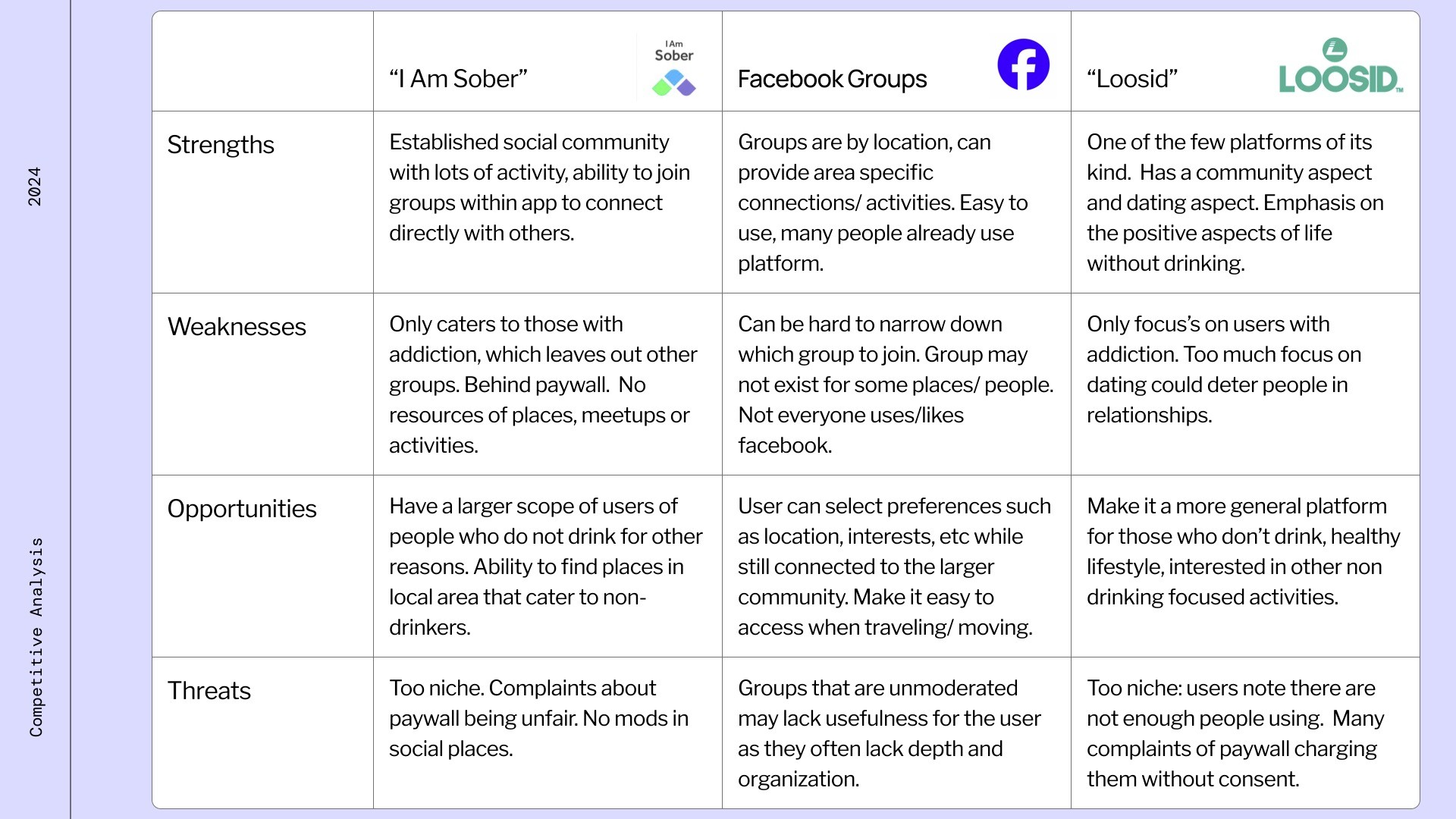
To better understand the ecosystem, I conducted a competitive analysis of platforms such as Facebook groups, I Am Sober, and Loosid. While these platforms provide community spaces, they revealed key gaps:
Many cater primarily to addiction recovery
Some are behind paywalls
Local activity discovery is limited
Community moderation and structure vary
Several platforms feel niche or overly focused on dating
This analysis revealed an opportunity for a more inclusive, lifestyle-focused platform rather than one framed around recovery.
I began by examining the broader social landscape. Many people find it easy to meet others in environments centered around alcohol, such as bars or parties. However, those who choose not to drink often struggle to find comparable social opportunities.
The core tension became clear:
Everyone wants to feel part of a community, but non-drinkers often lack accessible, visible spaces to connect.
To better understand the ecosystem, I conducted a competitive analysis of platforms such as Facebook groups, I Am Sober, and Loosid. While these platforms provide community spaces, they revealed key gaps:
• Many cater primarily to addiction
• Some are behind paywalls
• Local activity discovery is limited
• Community moderation and structure vary
• Some platforms feel niche or focused on dating
This analysis revealed an opportunity for a more inclusive, lifestyle-focused platform rather than one framed around recovery.
Competitive Analysis
Many social spaces revolve around alcohol, making it difficult for non-drinkers to:
Meet like-minded people
Discover hobbies not centered around drinking
Feel included in traditional social settings
In 2021, 22% of Americans reported cutting back on alcohol. By 2024, that number increased to 32%. Despite this shift, the social landscape has not evolved at the same pace.
Non-drinkers are left asking:
How can I socialize, find activities, and build community without alcohol being the center of the experience?
Many social spaces revolve around alcohol, making it difficult for non-drinkers to:
• Meet like-minded people
• Discover hobbies not centered around
drinking
• Feel included in traditional social settings
In 2021, 22% of Americans reported cutting back on alcohol. By 2024, that number increased to 32%. Despite this shift, the social landscape has not evolved at the same pace.
Non-drinkers are left asking:
How can I socialize, find activities, and build
community without alcohol being the center of the
experience?
Surverys and Interviews
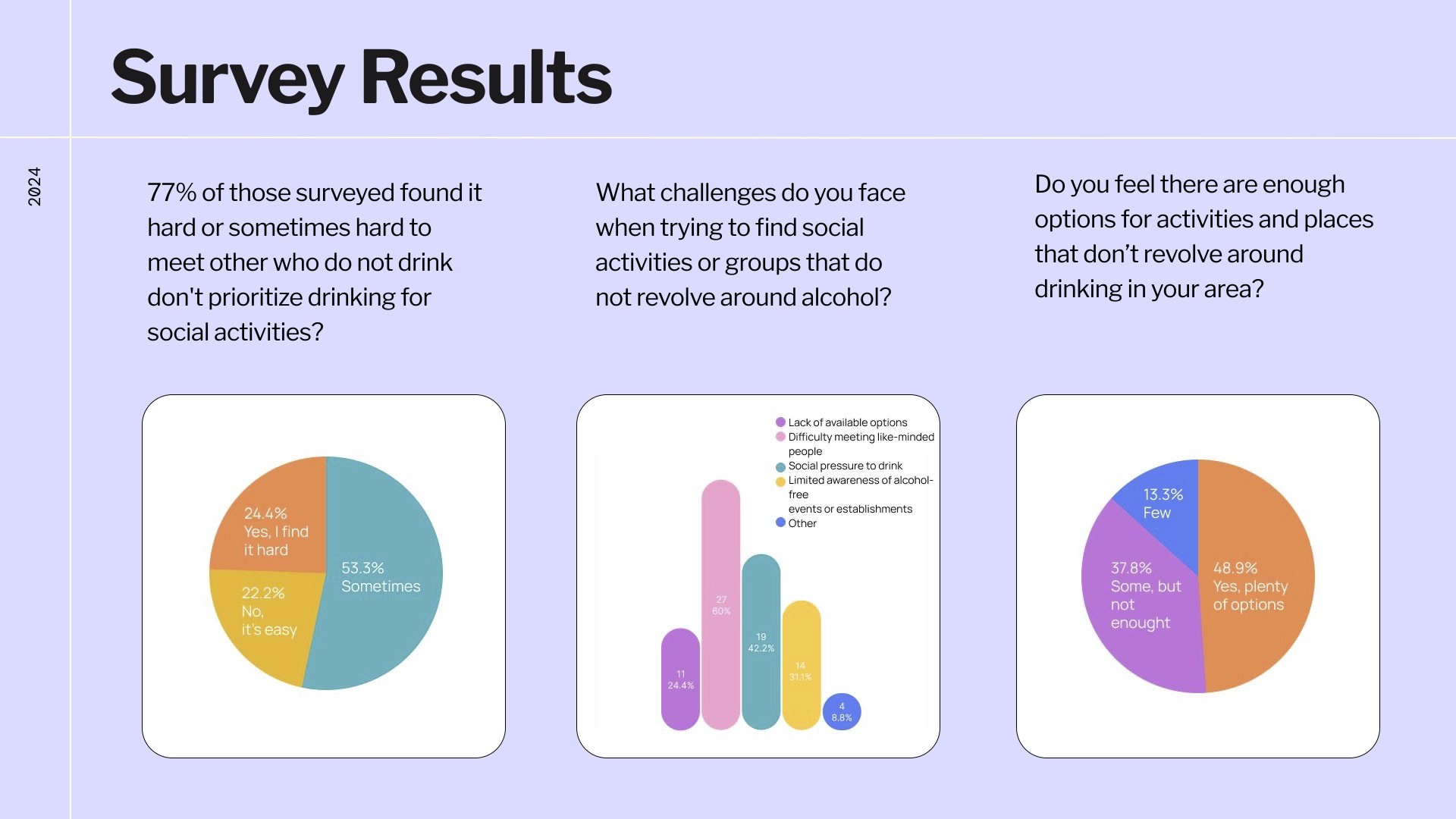
We surveyed 45 adults and interviewed one self-identified non-drinker. Key findings: 77% reported it is hard or sometimes hard to meet others who don’t prioritize drinking Many struggle to find alcohol-free events in their area Several participants reported feeling left out in social settings
Quotes from participants:
“In 4 years of recovery, I have not met anyone.”
“I’m always looking for new ways to meet people that also think like this.”
“I went to a social event and felt left out because everyone was drinking.”
We surveyed 45 adults and interviewed one self-identified non-drinker. Key findings: 77% reported it is hard or sometimes hard to meet others who don’t prioritize drinking Many struggle to find alcohol-free events in their area Several participants reported feeling left out in social settings
Quotes from participants:
“In 4 years of recovery, I have not met anyone.”
“I’m always looking for new ways to meet people that also think like this.”
“I went to a social event and felt left out because everyone was drinking.”
User Research
My research process began with a full audit of the existing website. I evaluated navigation structure, content organization, and visual consistency to identify where users might feel overwhelmed or disengaged.
I also reviewed other grooming and lifestyle websites to understand how contemporary brands structure educational content. I paid close attention to how they break down routines into clear steps, use imagery to support instruction, and highlight key takeaways without overwhelming users.
Conversations with the client helped clarify their audience. They wanted to reach men looking for straightforward, practical grooming guidance rather than highly technical advice or flashy branding.
One key insight became clear. Users in this space tend to scan quickly for actionable tips. Long, uninterrupted text without strong hierarchy makes content feel intimidating and harder to apply.
Ultimately, users did not need more information than the original site provided. They needed clearer organization and a cleaner way to experience it.
My research process began with a full audit of the existing website. I evaluated navigation structure, content organization, and visual consistency to identify where users might feel overwhelmed or disengaged.
I also reviewed other grooming and lifestyle websites to understand how contemporary brands structure educational content. I paid close attention to how they break down routines into clear steps, use imagery to support instruction, and highlight key takeaways without overwhelming users.
Conversations with the client helped clarify their audience. They wanted to reach men looking for straightforward, practical grooming guidance rather than highly technical advice or flashy branding.
One key insight became clear. Users in this space tend to scan quickly for actionable tips. Long, uninterrupted text without strong hierarchy makes content feel intimidating and harder to apply.
Ultimately, users did not need more information than the original site provided. They needed clearer organization and a cleaner way to experience it.
Design Approach
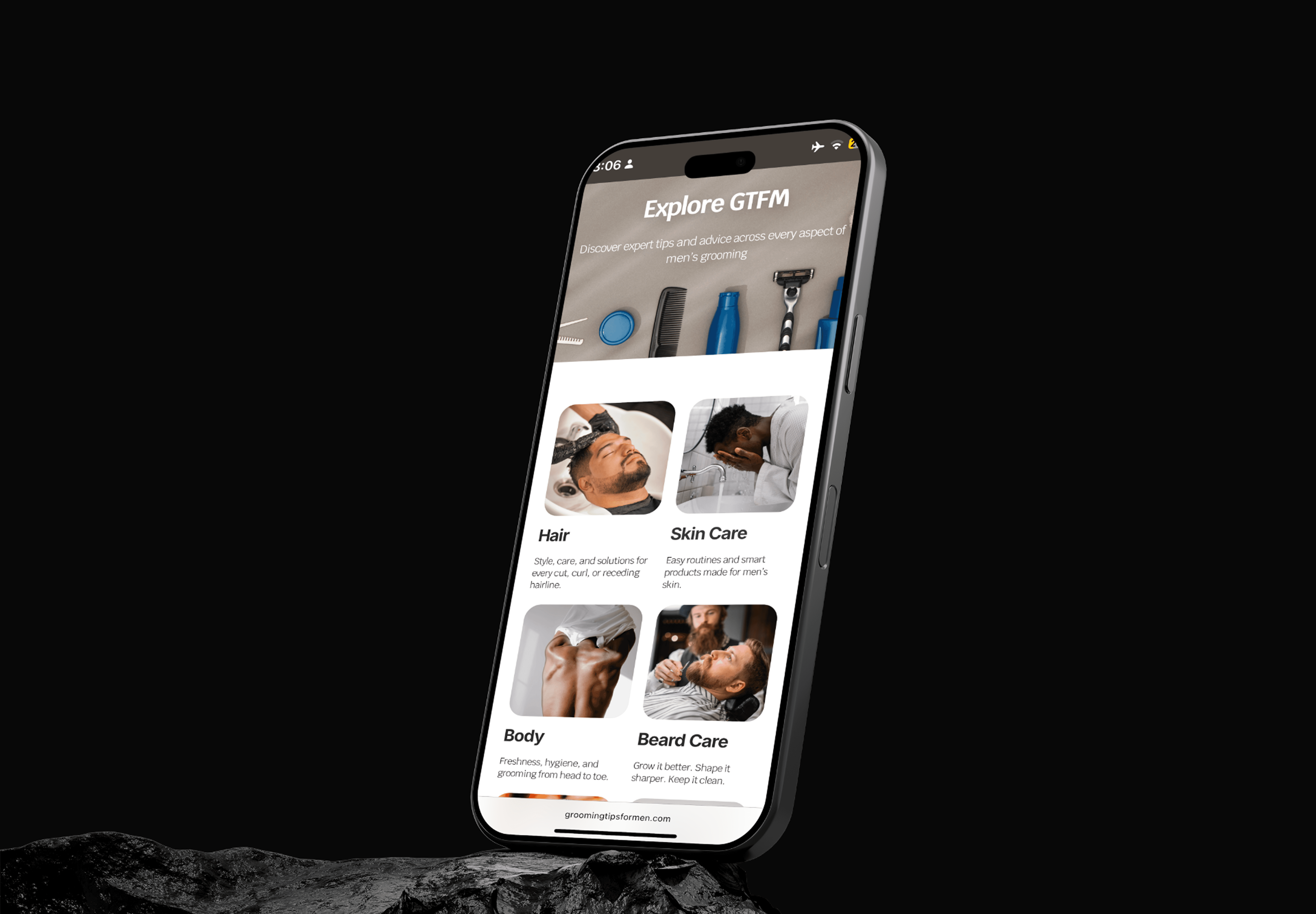
I started by restructuring the site’s information architecture. Grooming categories such as skincare, beard care, haircare, and product guides were grouped more logically so users could immediately understand where they were and where to go next.
Next, I focused on improving content hierarchy within individual pages. I introduced clearer headings, subheadings, and spacing to break advice into manageable sections. Step by step routines were emphasized visually so users could scan quickly without needing to read every paragraph in detail.
Visually, I leaned into simplicity. I refined typography for readability, increased white space, and reduced unnecessary interface elements. The goal was to make the design feel supportive and calm rather than distracting.
Throughout the process, I continually asked myself whether each decision made the advice easier to understand and apply.
I started by restructuring the site’s information architecture. Grooming categories such as skincare, beard care, haircare, and product guides were grouped more logically so users could immediately understand where they were and where to go next.
Next, I focused on improving content hierarchy within individual pages. I introduced clearer headings, subheadings, and spacing to break advice into manageable sections. Step by step routines were emphasized visually so users could scan quickly without needing to read every paragraph in detail.
Visually, I leaned into simplicity. I refined typography for readability, increased white space, and reduced unnecessary interface elements. The goal was to make the design feel supportive and calm rather than distracting.
Throughout the process, I continually asked myself whether each decision made the advice easier to understand and apply.
Outcome
The redesigned experience feels clearer, more modern, and more structured. Grooming topics are easier to navigate, articles are more digestible, and users can quickly identify actionable steps.
The simplified interface and improved hierarchy increased readability and reduced friction, allowing the content to take center stage. The overall aesthetic feels more credible and aligned with a contemporary lifestyle brand.
While I did not have access to quantitative metrics, the client shared that the new design felt more professional and easier to navigate. The clarity of the experience made them more confident in sharing the site with their audience.
The redesigned experience feels clearer, more modern, and more structured. Grooming topics are easier to navigate, articles are more digestible, and users can quickly identify actionable steps.
The simplified interface and improved hierarchy increased readability and reduced friction, allowing the content to take center stage. The overall aesthetic feels more credible and aligned with a contemporary lifestyle brand.
While I did not have access to quantitative metrics, the client shared that the new design felt more professional and easier to navigate. The clarity of the experience made them more confident in sharing the site with their audience.
Reflection
This project reinforced how important structure and hierarchy are in content heavy experiences. Even strong information can feel overwhelming without thoughtful organization.
I also learned how closely design influences perceived credibility. A clean, intentional layout can make practical advice feel more trustworthy and easier to act on.
If I were to continue refining this project, I would conduct usability testing to better understand how users move through grooming routines and where additional simplification could improve the experience.
This project reinforced how important structure and hierarchy are in content heavy experiences. Even strong information can feel overwhelming without thoughtful organization.
I also learned how closely design influences perceived credibility. A clean, intentional layout can make practical advice feel more trustworthy and easier to act on.
If I were to continue refining this project, I would conduct usability testing to better understand how users move through grooming routines and where additional simplification could improve the experience.