New Ethiopia Tours
New Ethiopia Tours
UX Case Study
UX Case Study
Role: UX Designer
Platform: Website
Project type: Client / Freelance
New Ethiopian Tours offers cultural, historical, and nature-based travel experiences across Ethiopia, primarily for international travelers who may be unfamiliar with the country.
When I began this project, I wasn’t just thinking about how the website should look, I was thinking about how it should feel to someone planning a trip to a place they don’t yet know. The existing design felt outdated and visually cluttered, which made the experience feel less inspiring and less trustworthy than the tours themselves.
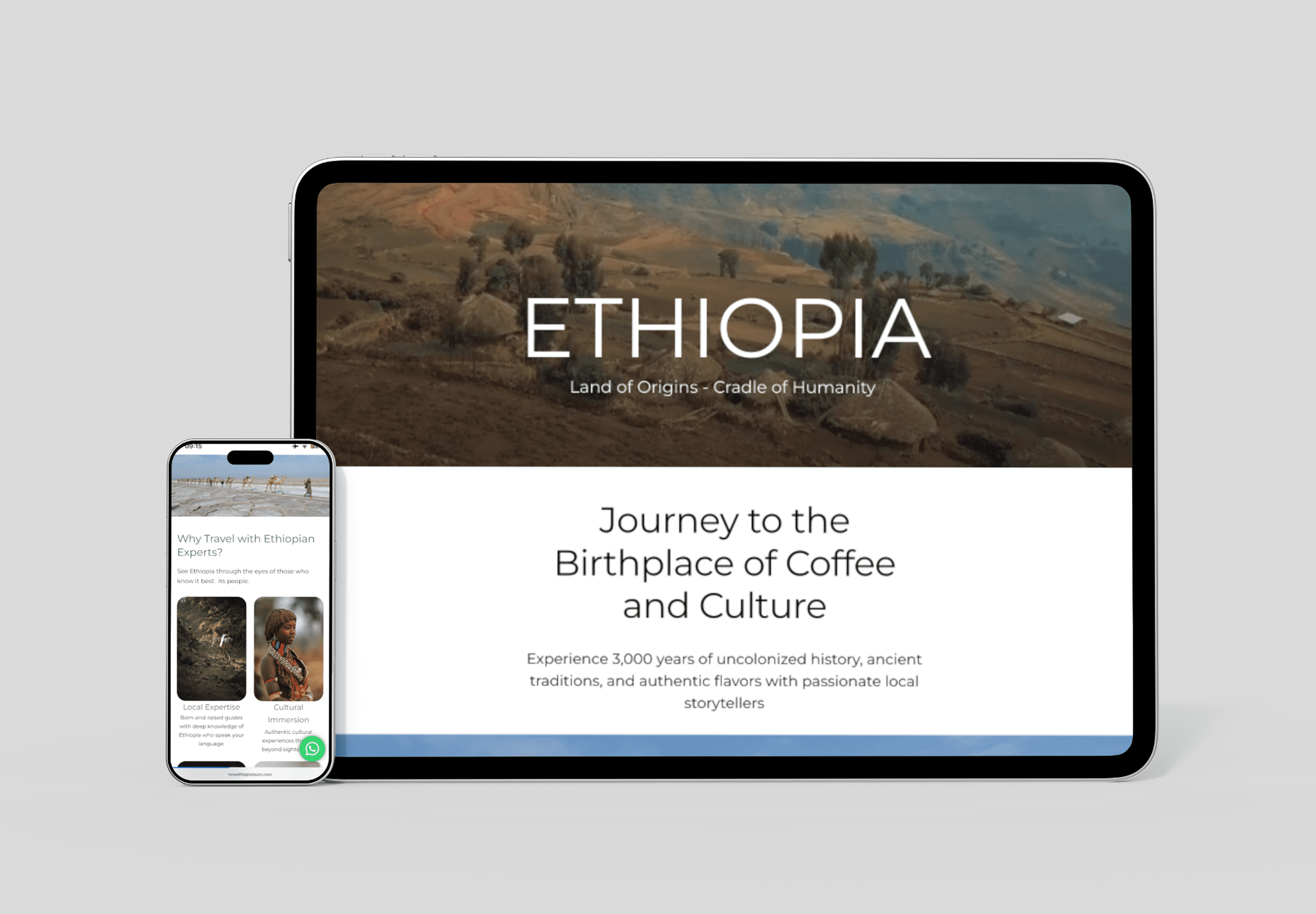
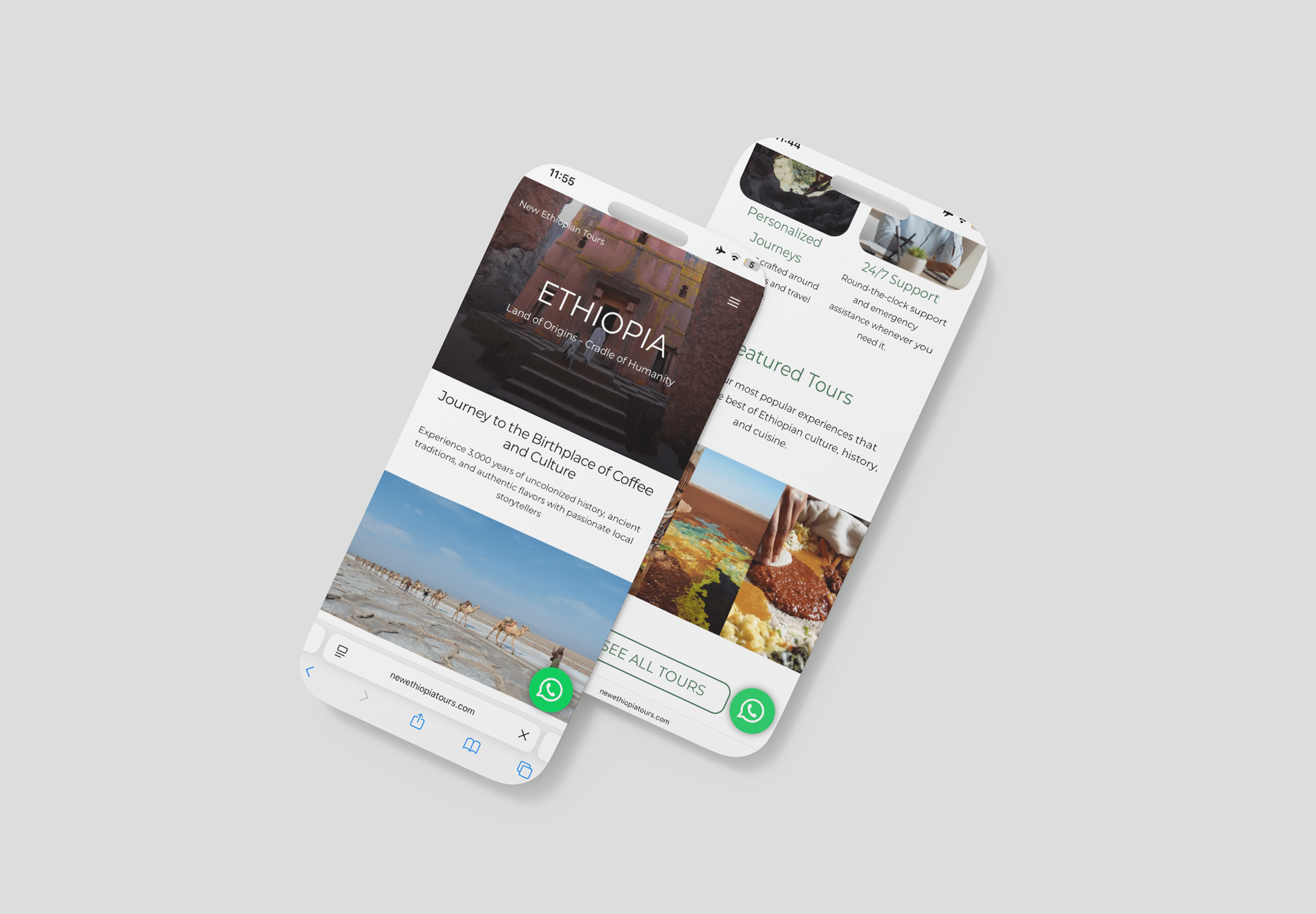
My goal was to redesign key parts of the site so it felt clearer, calmer, and more modern, while also being more photo and content-driven. I wanted the beauty of Ethiopia and the richness of the experiences to take center stage, supported by simple, intentional design rather than competing with it.
Throughout the process, I tried to balance inspiration and storytelling with practical usability, so users could both imagine themselves on the journey and feel confident taking the next step.
Problem Statement
Problem Statement
When I first reviewed the original website, I saw that it contained a lot of valuable information, but it was buried beneath an outdated and klunky design. Visually, the site felt heavy, inconsistent, and not aligned with the quality of the tours being offered.
From a usability standpoint, users had to work too hard to answer basic questions like what kinds of tours were available, who they were meant for, and why they should trust this company. The navigation felt scattered, the content hierarchy was unclear, and the absence of strong imagery made the site feel less engaging and informative.
Because planning a trip involves time, money, and a sense of personal safety, this combination of outdated visuals and confusing structure created unnecessary friction and likely discouraged potential travelers from reaching out.
When I first reviewed the original website, I saw that it contained a lot of valuable information, but it was buried beneath an outdated and klunky design. Visually, the site felt heavy, inconsistent, and not aligned with the quality of the tours being offered.
From a usability standpoint, users had to work too hard to answer basic questions like what kinds of tours were available, who they were meant for, and why they should trust this company. The navigation felt scattered, the content hierarchy was unclear, and the absence of strong imagery made the site feel less engaging and informative.
Because planning a trip involves time, money, and a sense of personal safety, this combination of outdated visuals and confusing structure created unnecessary friction and likely discouraged potential travelers from reaching out.
Here are some challenges in the original website experience:
Here are some challenges in the original website experience:
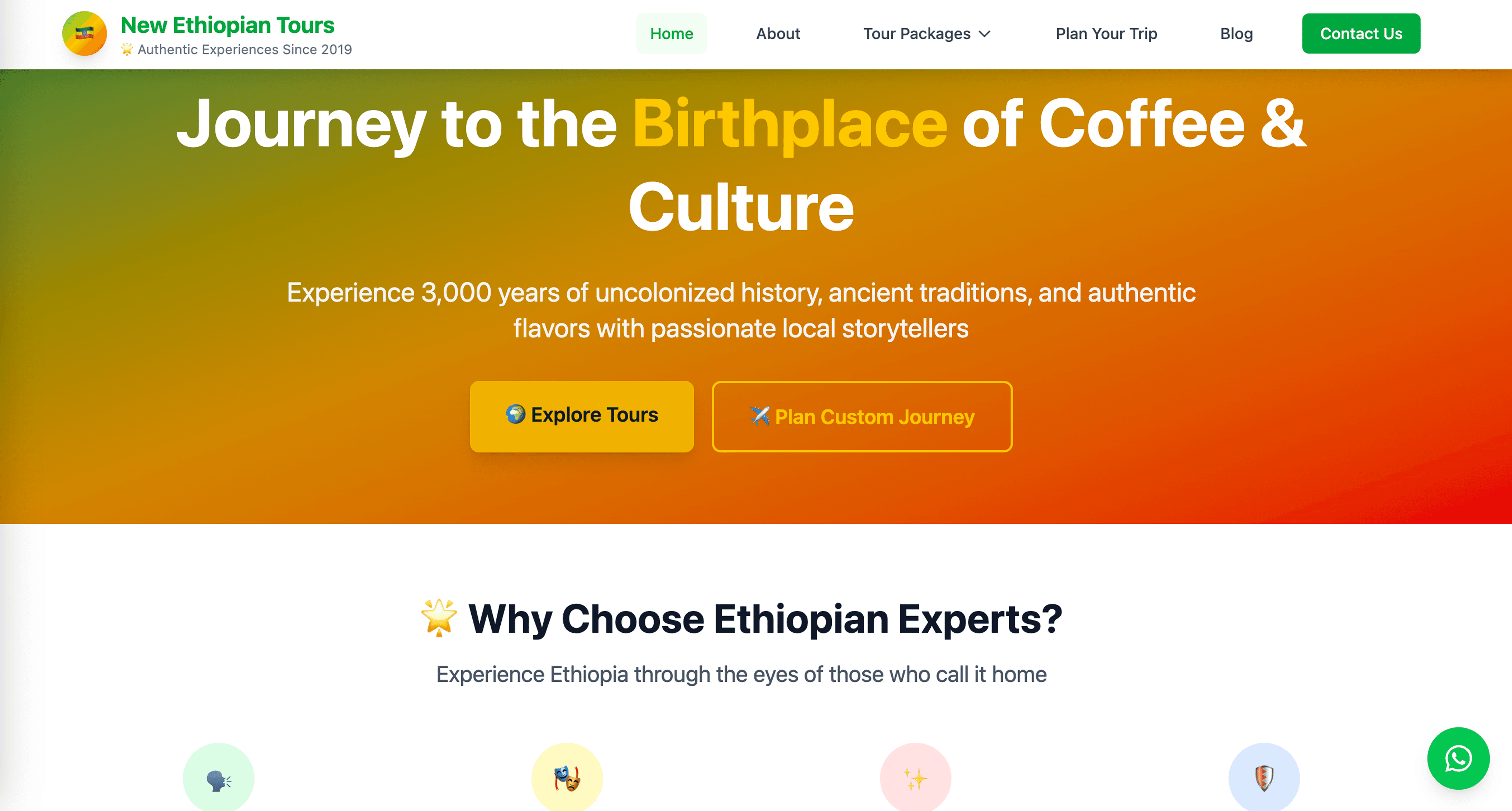
Key decision-making elements lack hierarchy, making it difficult to scan and compare options.
Photography is present, but not used strategically to guide attention or tell a cohesive story.
Key decision-making elements lack hierarchy, making it difficult to scan and compare options.
Photography is present, but not used strategically to guide attention or tell a cohesive story.
Key decision-making elements lack hierarchy, making it difficult to scan and compare options.
Photography is present, but not used strategically to guide attention or tell a cohesive story.
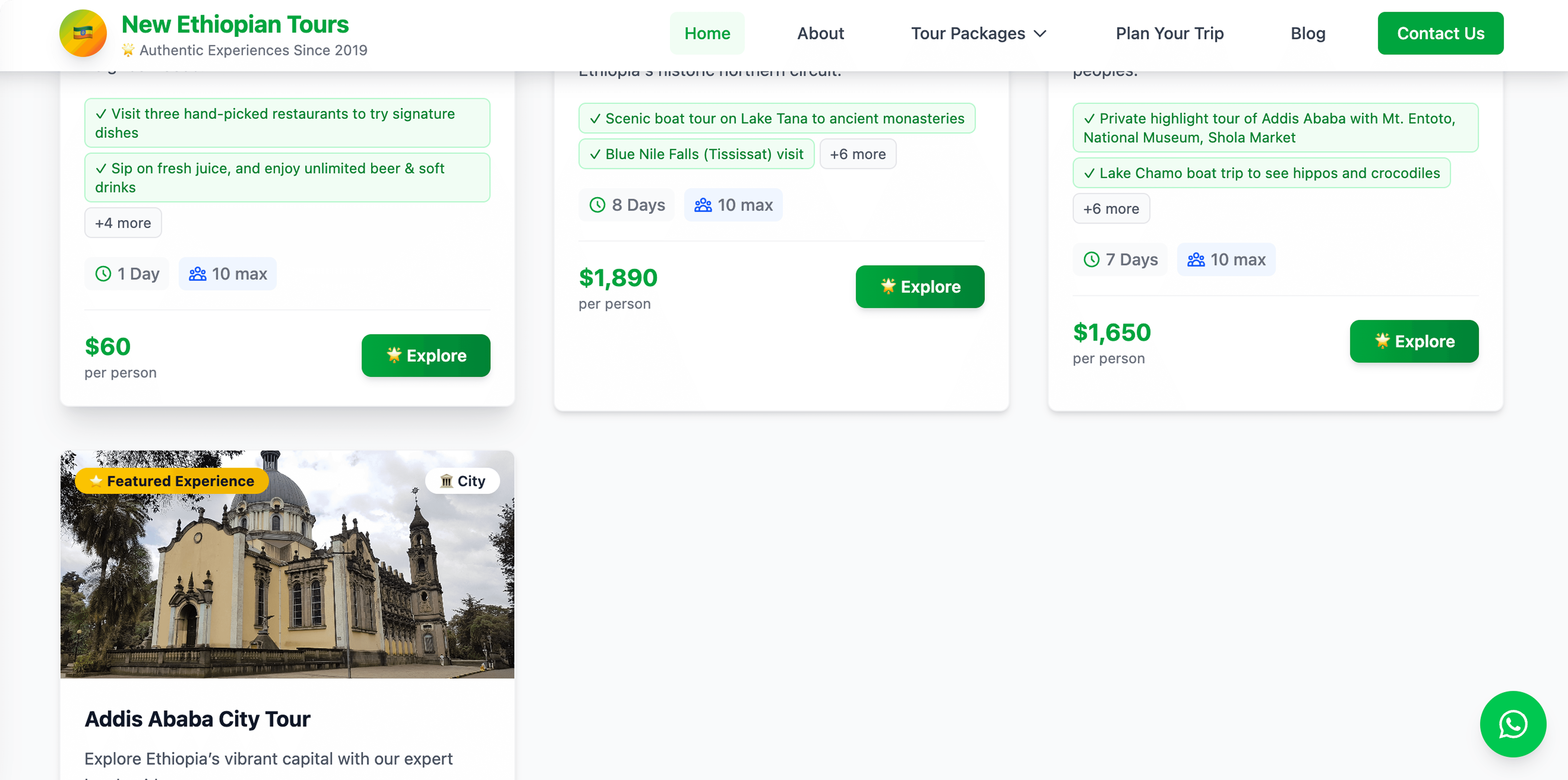
Too much information is presented at once, making it hard for users to know where to look first.
The UI feels heavy and outdated, relying more on interface elements than storytelling or imagery.
Too much information is presented at once, making it hard for users to know where to look first.
The UI feels heavy and outdated, relying more on interface elements than storytelling or imagery.
Too much information is presented at once, making it hard for users to know where to look first.
The UI feels heavy and outdated, relying more on interface elements than storytelling or imagery.
UX Goal
My main goal was to showcase Ethiopia’s unique culture and rich history through a simple, content-driven design that allows the stories and visuals to take center stage, while also giving the brand a fresh, more contemporary feel.
I wanted to reduce cognitive load, make tour options easier to understand and compare, and build trust through clarity, simplicity, and strong visual storytelling. Instead of a text-heavy, cluttered site, I aimed for a more photo-driven and content-driven experience where imagery and well-organized information worked together.
My primary UX goal was to make the content easy to explore and digest, helping users connect with Ethiopia’s culture and history without friction.
My main goal was to showcase Ethiopia’s unique culture and rich history through a simple, content-driven design that allows the stories and visuals to take center stage, while also giving the brand a fresh, more contemporary feel.
I wanted to reduce cognitive load, make tour options easier to understand and compare, and build trust through clarity, simplicity, and strong visual storytelling. Instead of a text-heavy, cluttered site, I aimed for a more photo-driven and content-driven experience where imagery and well-organized information worked together.
My primary UX goal was to make the content easy to explore and digest, helping users connect with Ethiopia’s culture and history without friction.
User Research
My research process was simple but designed to uncover key insights. I began with a full audit of the existing website to identify where users were likely dropping off, getting stuck or frustrated, as well as where the visual design was falling short. I also reviewed other tour and travel websites to understand how contemporary brands use imagery, storytelling, and layout to build trust and inspire exploration.
Conversations with the client helped me better understand their audience, values, and the kinds of travelers they wanted to attract.
One insight became especially clear: people browsing travel sites tend to scan quickly rather than read deeply, and too much undifferentiated text, combined with an outdated layout, can make a site feel overwhelming and untrustworthy.
I also realized that beautiful photography of Ethiopia was one of the company’s greatest assets, but it wasn’t being used.
Ultimately, I learned that users didn’t need much more information than the original website provided. They needed better-organized content and a cleaner, more visual way to experience it.
My research process was simple but designed to uncover key insights. I began with a full audit of the existing website to identify where users were likely dropping off, getting stuck or frustrated, as well as where the visual design was falling short. I also reviewed other tour and travel websites to understand how contemporary brands use imagery, storytelling, and layout to build trust and inspire exploration.
Conversations with the client helped me better understand their audience, values, and the kinds of travelers they wanted to attract.
One insight became especially clear: people browsing travel sites tend to scan quickly rather than read deeply, and too much undifferentiated text, combined with an outdated layout, can make a site feel overwhelming and untrustworthy.
I also realized that beautiful photography of Ethiopia was one of the company’s greatest assets, but it wasn’t being used.
Ultimately, I learned that users didn’t need much more information than the original website provided. They needed better-organized content and a cleaner, more visual way to experience it.
Design Approach
I started by rethinking the site’s structure. I reorganized the information architecture so tours were grouped more logically, navigation felt more predictable, and users didn’t have to make too many decisions at once. This immediately made the site feel less chaotic and more intentional.
From there, I focused on content hierarchy. I rearranged information so the most important details- the type of experience, location, and who the tour was best suited for, appeared first, with supporting details available but less prominent. This helped users scan quickly without losing depth.
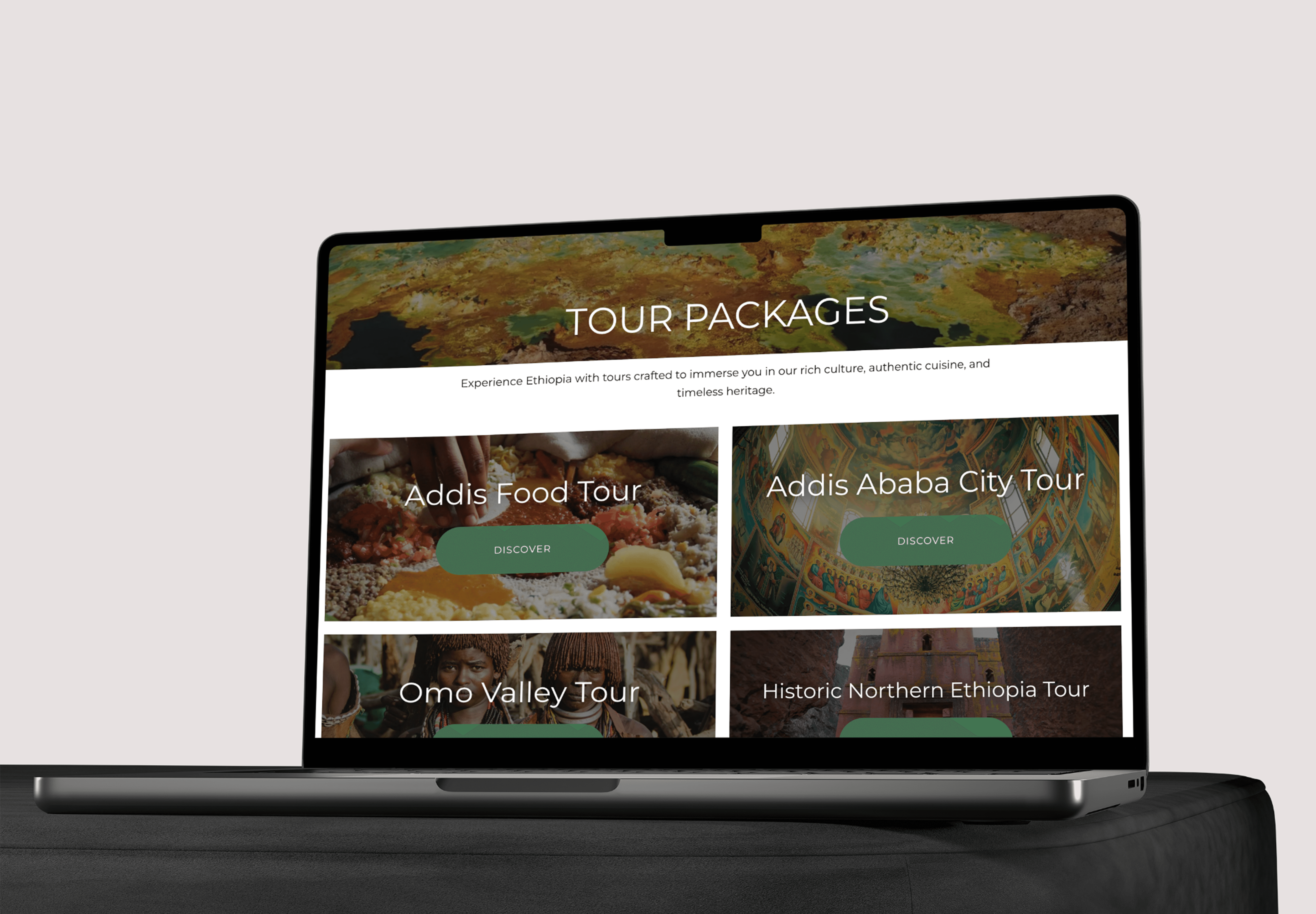
Visually, I intentionally moved away from the outdated aesthetic and leaned into simplicity. I introduced cleaner layouts with more breathing room, clearer typography, and more prominent, high-quality imagery. Instead of competing elements, the design became a frame that allowed photos and content to be the main focus.
The new design delivered a cleaner, more refined, and credible experience, better conveying the real-world charm of the tours.
I continually asked myself: does this design help users make decisions and contact the client to book more efficiently?
I started by rethinking the site’s structure. I reorganized the information architecture so tours were grouped more logically, navigation felt more predictable, and users didn’t have to make too many decisions at once. This immediately made the site feel less chaotic and more intentional.
From there, I focused on content hierarchy. I rearranged information so the most important details- the type of experience, location, and who the tour was best suited for, appeared first, with supporting details available but less prominent. This helped users scan quickly without losing depth.
Visually, I intentionally moved away from the outdated aesthetic and leaned into simplicity. I introduced cleaner layouts with more breathing room, clearer typography, and more prominent, high-quality imagery. Instead of competing elements, the design became a frame that allowed photos and content to be the main focus.
The new design delivered a cleaner, more refined, and credible experience, better conveying the real-world charm of the tours.
I continually asked myself: does this design help users make decisions and contact the client to book more efficiently?
Outcome
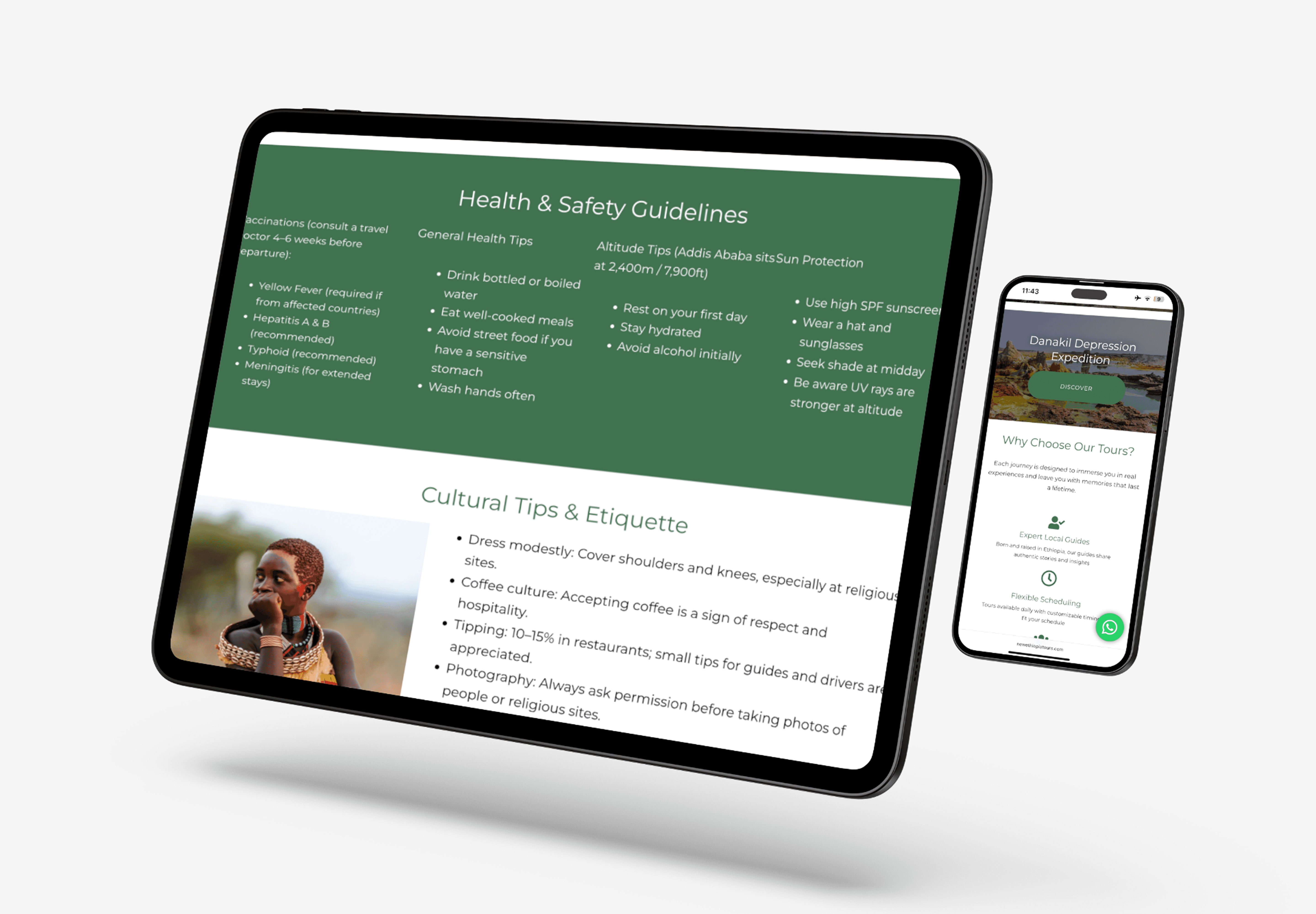
The redesigned experience made tour offerings much clearer and easier to compare, while also giving the brand a refreshed, more contemporary feel. I cleaned up the color palette to keep it simple and let the imagery take center stage, decluttered the interface, and added multiple CTAs throughout the site to encourage users to book or contact the client. Navigation felt smoother, the site looked more professional, and the visual focus shifted toward storytelling through imagery and well-structured content.
While I didn’t have access to hard metrics like conversion rates, the client shared that the new design felt clearer, more polished, and more aligned with their brand. They also felt more confident sharing the site with potential travelers, which was a meaningful success.
The redesigned experience made tour offerings much clearer and easier to compare, while also giving the brand a refreshed, more contemporary feel. I cleaned up the color palette to keep it simple and let the imagery take center stage, decluttered the interface, and added multiple CTAs throughout the site to encourage users to book or contact the client. Navigation felt smoother, the site looked more professional, and the visual focus shifted toward storytelling through imagery and well-structured content.
While I didn’t have access to hard metrics like conversion rates, the client shared that the new design felt clearer, more polished, and more aligned with their brand. They also felt more confident sharing the site with potential travelers, which was a meaningful success.
Reflection
This project reminded me how closely usability and visual design are connected. An outdated aesthetic doesn’t just affect appearance: it can shape how trustworthy and easy a site feels.
I also saw how powerful simplicity can be. By stripping back clutter, improving hierarchy, and letting photos and content take center stage, the experience became both more beautiful and more functional.
If I were to continue this project, I would love to conduct user testing to validate my decisions and refine the inquiry flow even further.
This project reminded me how closely usability and visual design are connected. An outdated aesthetic doesn’t just affect appearance: it can shape how trustworthy and easy a site feels.
I also saw how powerful simplicity can be. By stripping back clutter, improving hierarchy, and letting photos and content take center stage, the experience became both more beautiful and more functional.
If I were to continue this project, I would love to conduct user testing to validate my decisions and refine the inquiry flow even further.