Grooming Tips for Men
Grooming Tips for Men
UX Case Study
UX Case Study
Role: UX Designer
Platform: Website
Project type: Client / Freelance
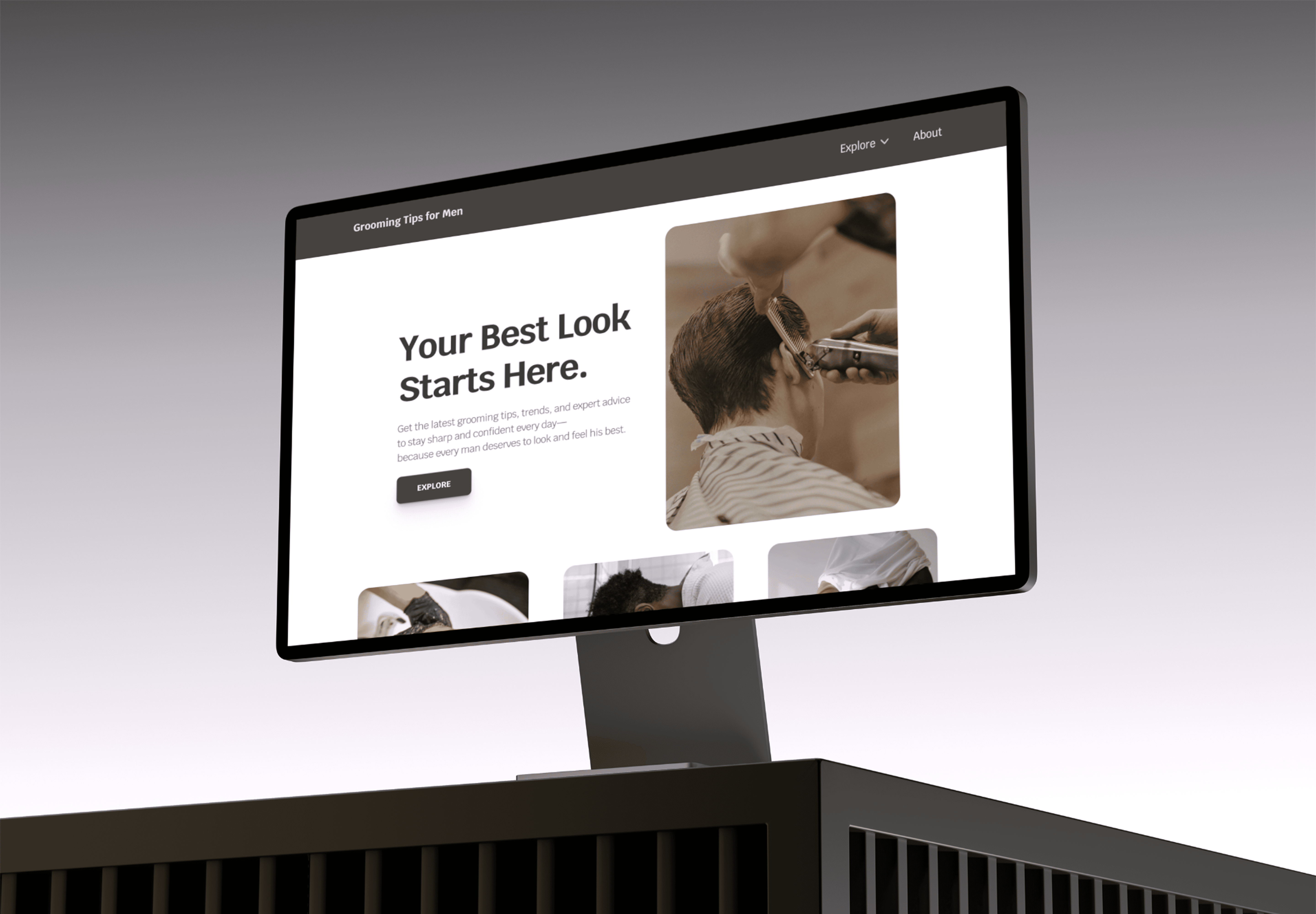
Grooming Tips for Men is a content-driven website focused on helping men feel more confident in their daily grooming routines. The brand provides practical advice, product recommendations, and educational content in a way that feels approachable rather than overwhelming.
When I began this project, I was not just thinking about how the website should look. I was thinking about how it should feel for someone searching for guidance on something personal. Grooming is often connected to confidence and self image, so the experience needed to feel clear, supportive, and trustworthy.
The existing site contained useful information, but was outdated and needed to be modernized. Instead of guiding users step by step, the layout made it easy to feel unsure about where to start.
My goal was to redesign key parts of the site so it felt structured, modern, and easy to navigate. I wanted the content to feel practical and digestible, supported by clean design and thoughtful hierarchy rather than cluttered layouts.
Throughout the process, I focused on balancing education with usability so users could quickly find advice relevant to them while still feeling informed and confident.
Problem Statement
When I first reviewed the original website, I saw that while the information was valuable, it lacked structure and clarity. Articles were dense, categories were loosely organized, and there was little visual hierarchy to help users scan efficiently. In addition, much of the content had not been updated in years, which affected both relevance and credibility.
From a usability standpoint, users had to work too hard to answer basic questions such as where to begin, which advice applied to them, and what steps they should take next. The site did not clearly guide users through grooming routines or help them move confidently between related topics.
The navigation felt broad and undefined, making it difficult to transition between areas like skincare, haircare, and beard grooming without friction. The design also lacked strong visual cues, which reduced engagement and made the experience feel less modern and authoritative.
Because grooming advice is practical and routine based, users need clarity and quick answers. The absence of hierarchy, combined with outdated content and unclear pathways, created unnecessary cognitive load and likely discouraged deeper engagement. It also limited the site’s potential to grow into a stronger, monetized platform in the future.
Key challenges in the original website experience:
• Important information lacked hierarchy, making it difficult to scan and prioritize advice.
• Articles were text heavy, visually dense, and in need of content updates.
• Categories were not clearly segmented, causing confusion between topics.
• The interface felt dated and inconsistent, reducing perceived credibility.
• The existing structure was not optimized for future AdSense integration or sustainable traffic growth.
When I first reviewed the original website, I saw that while the information was valuable, it lacked structure and clarity. Articles were dense, categories were loosely organized, and there was little visual hierarchy to help users scan efficiently. In addition, much of the content had not been updated in years, which affected both relevance and credibility.
From a usability standpoint, users had to work too hard to answer basic questions such as where to begin, which advice applied to them, and what steps they should take next. The site did not clearly guide users through grooming routines or help them move confidently between related topics.
The navigation felt broad and undefined, making it difficult to transition between areas like skincare, haircare, and beard grooming without friction. The design also lacked strong visual cues, which reduced engagement and made the experience feel less modern and authoritative.
Because grooming advice is practical and routine based, users need clarity and quick answers. The absence of hierarchy, combined with outdated content and unclear pathways, created unnecessary cognitive load and likely discouraged deeper engagement. It also limited the site’s potential to grow into a stronger, monetized platform in the future.
Key challenges in the original website experience:
• Important information lacked hierarchy, making it difficult to scan and prioritize advice.
• Articles were text heavy, visually dense, and in need of content updates.
• Categories were not clearly segmented, causing confusion between topics.
• The interface felt dated and inconsistent, reducing perceived credibility.
• The existing structure was not optimized for future AdSense integration or sustainable traffic growth.
When I first reviewed the original website, I saw that while the information was valuable, it lacked structure and clarity. Articles were dense, categories were loosely organized, and there was little visual hierarchy to help users scan efficiently. In addition, much of the content had not been updated in years, which affected both relevance and credibility.
From a usability standpoint, users had to work too hard to answer basic questions such as where to begin, which advice applied to them, and what steps they should take next. The site did not clearly guide users through grooming routines or help them move confidently between related topics.
The navigation felt broad and undefined, making it difficult to transition between areas like skincare, haircare, and beard grooming without friction. The design also lacked strong visual cues, which reduced engagement and made the experience feel less modern and authoritative.
Because grooming advice is practical and routine based, users need clarity and quick answers. The absence of hierarchy, combined with outdated content and unclear pathways, created unnecessary cognitive load and likely discouraged deeper engagement. It also limited the site’s potential to grow into a stronger, monetized platform in the future.
Key challenges in the original website experience:
• Important information lacked hierarchy, making it difficult to scan and prioritize advice.
• Articles were text heavy, visually dense, and in need of content updates.
• Categories were not clearly segmented, causing confusion between topics.
• The interface felt dated and inconsistent, reducing perceived credibility.
• The existing structure was not optimized for future AdSense integration or sustainable traffic growth.
Content Strategy
In addition to the visual redesign, I worked closely with the client to refresh and update the site’s content. Much of the existing material had not been updated in several years, which affected both relevance and credibility.
We audited existing articles to ensure the advice aligned with current grooming trends, refreshed product references, and updated the tone to feel more modern and relevant. I restructured select pieces to make them more concise and actionable, removing outdated information and clarifying key takeaways. We also optimized the content for SEO to improve visibility and long-term discoverability.
This process reinforced how closely content and design are connected. Even a well structured layout cannot fully support information that feels dated. By refining both the content and the interface, the experience became more relevant, trustworthy, and aligned with the needs of today’s audience.
In addition to the visual redesign, I worked closely with the client to refresh and update the site’s content. Much of the existing material had not been updated in several years, which affected both relevance and credibility.
We audited existing articles to ensure the advice aligned with current grooming trends, refreshed product references, and updated the tone to feel more modern and relevant. I restructured select pieces to make them more concise and actionable, removing outdated information and clarifying key takeaways. We also optimized the content for SEO to improve visibility and long-term discoverability.
This process reinforced how closely content and design are connected. Even a well structured layout cannot fully support information that feels dated. By refining both the content and the interface, the experience became more relevant, trustworthy, and aligned with the needs of today’s audience.
UX Goal
My main goal was to create a clear, structured, and content forward experience that made grooming advice easy to explore and apply.
I wanted to reduce cognitive load by organizing content into intuitive categories, improving hierarchy within articles, and creating clearer pathways between related topics. Instead of overwhelming users with large blocks of text, I aimed for a more digestible layout where spacing, typography, and structure guided the experience.
My primary UX goal was to make users feel confident and supported, able to quickly find practical advice and take action without hesitation.
My main goal was to create a clear, structured, and content forward experience that made grooming advice easy to explore and apply.
I wanted to reduce cognitive load by organizing content into intuitive categories, improving hierarchy within articles, and creating clearer pathways between related topics. Instead of overwhelming users with large blocks of text, I aimed for a more digestible layout where spacing, typography, and structure guided the experience.
My primary UX goal was to make users feel confident and supported, able to quickly find practical advice and take action without hesitation.
User Research
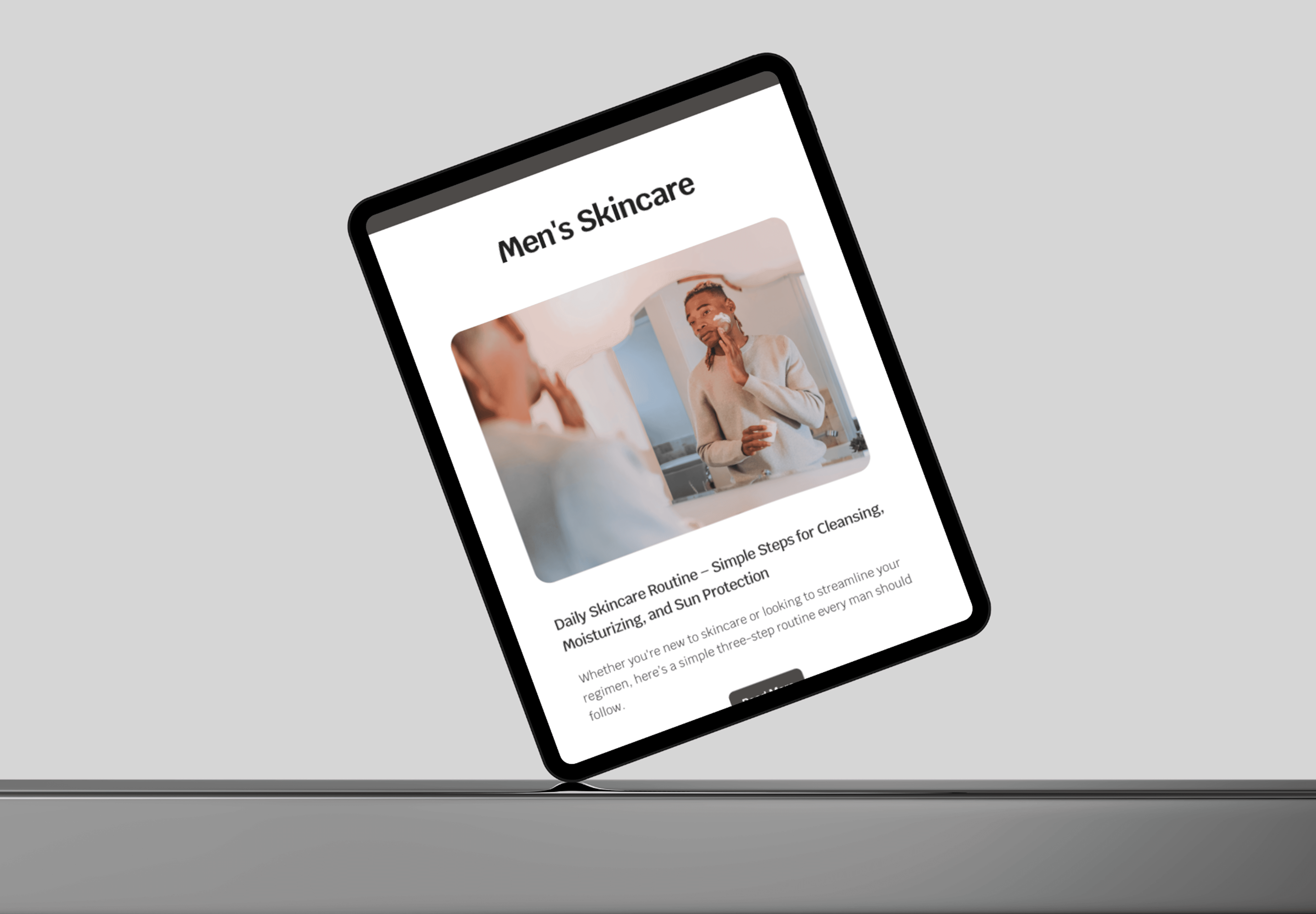
My research process began with a full audit of the existing website. I evaluated navigation structure, content organization, and visual consistency to identify where users might feel overwhelmed or disengaged.
I also reviewed other grooming and lifestyle websites to understand how contemporary brands structure educational content. I paid close attention to how they break down routines into clear steps, use imagery to support instruction, and highlight key takeaways without overwhelming users.
Conversations with the client helped clarify their audience. They wanted to reach men looking for straightforward, practical grooming guidance rather than highly technical advice or flashy branding.
Ultimately, users did not need more information than the original site provided. They needed clearer organization and a cleaner way to experience it.
My research process began with a full audit of the existing website. I evaluated navigation structure, content organization, and visual consistency to identify where users might feel overwhelmed or disengaged.
I also reviewed other grooming and lifestyle websites to understand how contemporary brands structure educational content. I paid close attention to how they break down routines into clear steps, use imagery to support instruction, and highlight key takeaways without overwhelming users.
Conversations with the client helped clarify their audience. They wanted to reach men looking for straightforward, practical grooming guidance rather than highly technical advice or flashy branding.
Ultimately, users did not need more information than the original site provided. They needed clearer organization and a cleaner way to experience it.
Design Approach
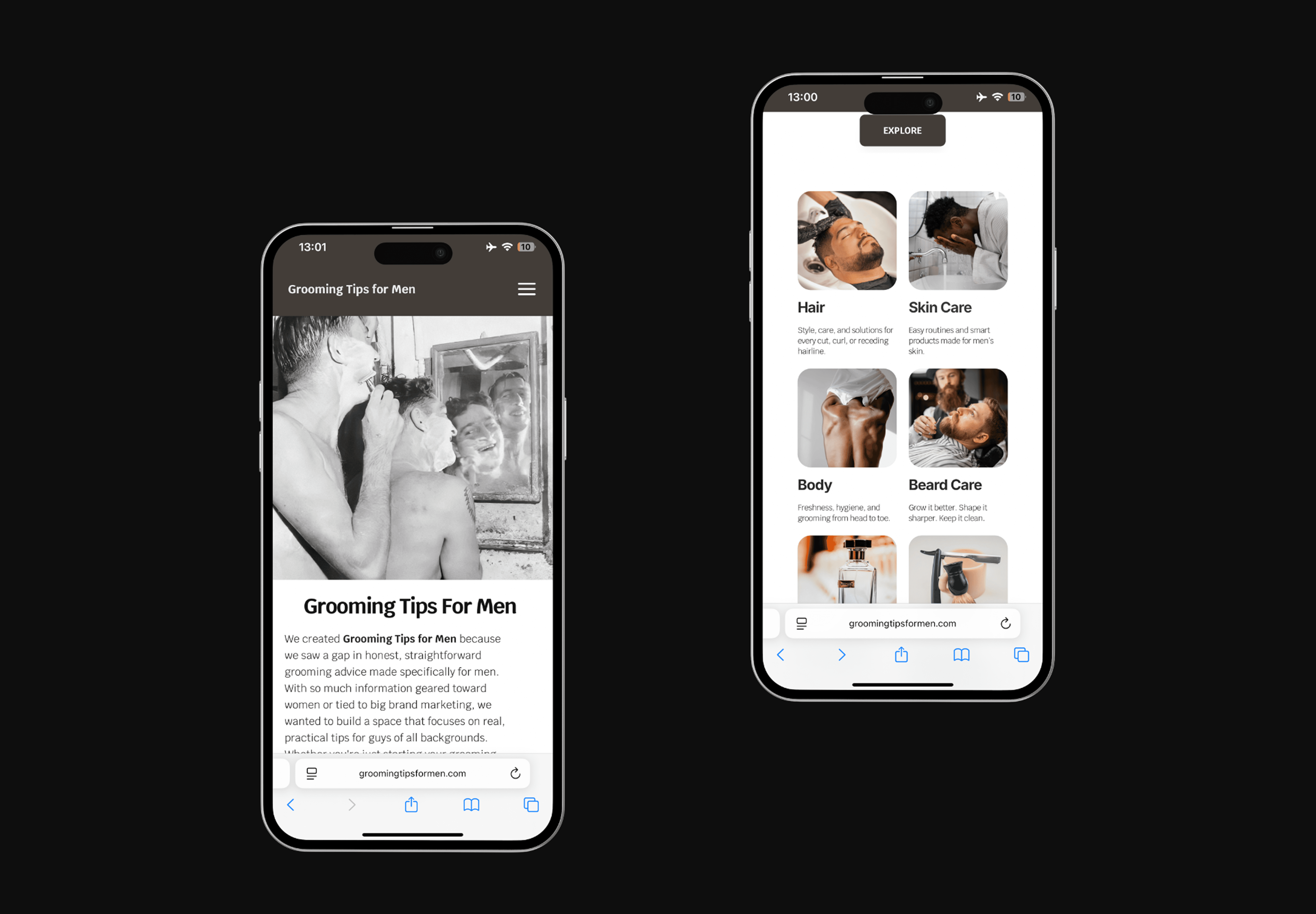
I restructured the site’s information architecture, grouping grooming categories more logically so users could navigate with clarity. I refined content hierarchy with clearer headings, improved spacing, and visually emphasized step-by-step routines to make advice easier to scan and apply.
Visually, I simplified the design by refining typography, increasing white space, and removing unnecessary elements to create a calm, focused experience. Throughout, I evaluated each decision against one goal: making the advice clearer and easier to act on.
I restructured the site’s information architecture, grouping grooming categories more logically so users could navigate with clarity. I refined content hierarchy with clearer headings, improved spacing, and visually emphasized step-by-step routines to make advice easier to scan and apply.
Visually, I simplified the design by refining typography, increasing white space, and removing unnecessary elements to create a calm, focused experience. Throughout, I evaluated each decision against one goal: making the advice clearer and easier to act on.
Outcome and Next Phase
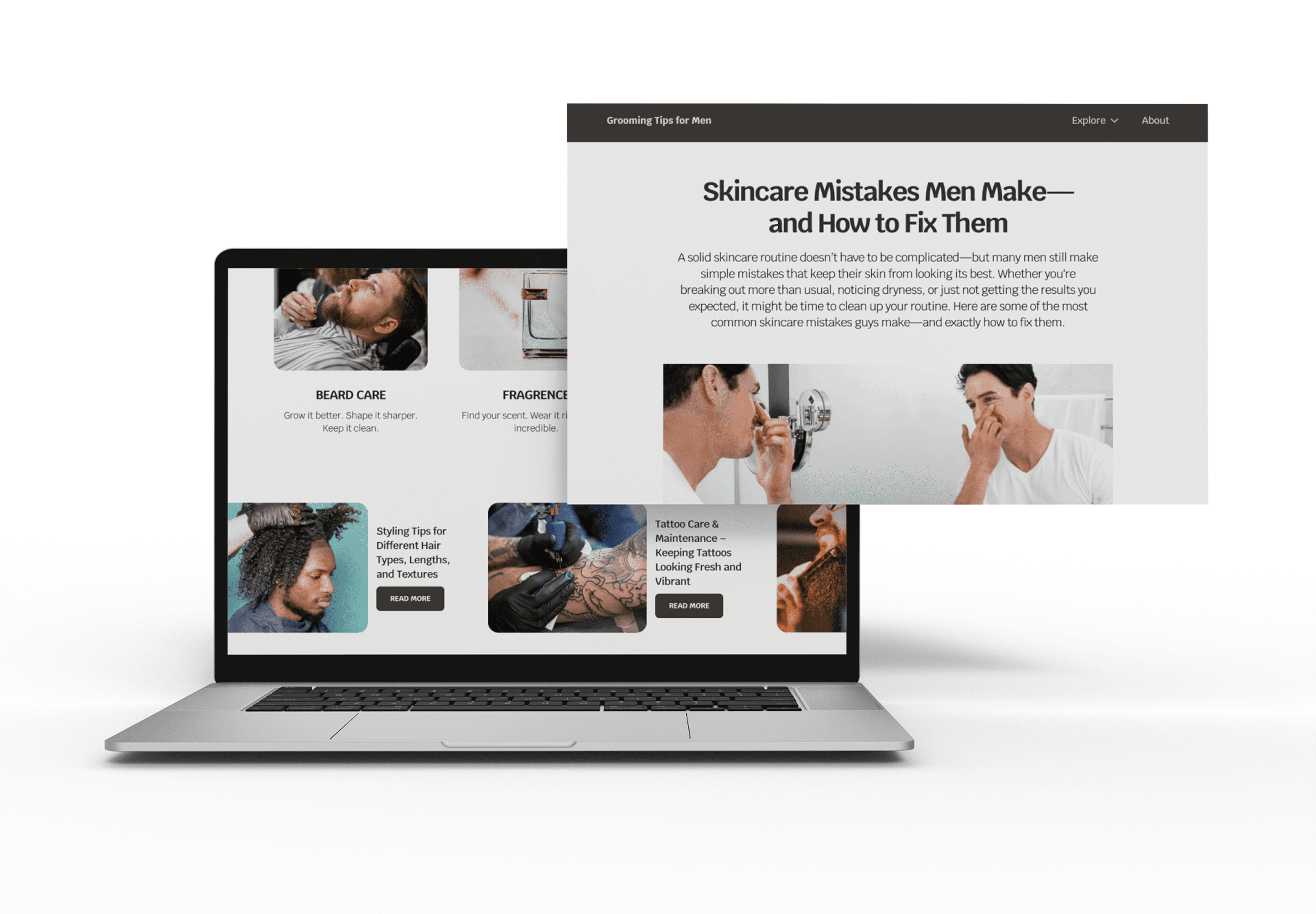
The redesigned site feels clearer, more modern, and easier to navigate. Articles are more digestible, actionable steps are easier to find, and the interface now feels credible and aligned with a contemporary lifestyle brand.
The refreshed structure supports readability and long-term growth. While I didn’t have access to metrics, the client noted the site feels significantly more professional and trustworthy. Looking ahead, the next phase will focus on integrating AdSense to generate income, including refining SEO strategy, identifying high-intent topics, and designing ad placements that are seamless and non-disruptive.
The redesigned site feels clearer, more modern, and easier to navigate. Articles are more digestible, actionable steps are easier to find, and the interface now feels credible and aligned with a contemporary lifestyle brand.
The refreshed structure supports readability and long-term growth. While I didn’t have access to metrics, the client noted the site feels significantly more professional and trustworthy. Looking ahead, the next phase will focus on integrating AdSense to generate income, including refining SEO strategy, identifying high-intent topics, and designing ad placements that are seamless and non-disruptive.
Reflection
This project reinforced how important structure and hierarchy are in content heavy experiences. Even strong information can feel overwhelming without thoughtful organization.
If I were to continue refining this project, I would conduct usability testing to better understand how users move through grooming routines and where additional simplification could improve the experience.
This project reinforced how important structure and hierarchy are in content heavy experiences. Even strong information can feel overwhelming without thoughtful organization.
If I were to continue refining this project, I would conduct usability testing to better understand how users move through grooming routines and where additional simplification could improve the experience.